
How to Choose the Right Dumbbells for Your Home Gym
Buying dumbbells for your home gym is one of the smartest investments you can make for strength, mobility, and long-term fitness. But with dozens of styles, materials, and price points, choosing the right pair or set can feel overwhelming.
This guide breaks the decision into practical steps: match equipment to goals, evaluate space and budget, consider ergonomics and durability, and plan complementary gear so your dumbbells get used consistently.
1. Know the main types of dumbbells
Start by understanding the core options so you can eliminate what won’t work for you. Common choices include fixed-weight hex or rubber-coated dumbbells, neoprene-coated light weights for aerobics, adjustable plate-loaded dumbbells, and selectorized sets that change weight quickly.
If you want to browse common styles and ready-made sets, check the selection categorized under Dumbbells to see how ranges and prices compare.
2. Match weight increments to your goals
Decide whether you’re building strength, improving endurance, or doing general conditioning. Strength-focused lifters usually want heavier fixed weights or heavy adjustable plates that allow small jumps (2.5–5 lb). Endurance and circuit training benefit from lighter, coated dumbbells that are comfortable for high reps.
Practical rule: choose a set that covers the heaviest weight you can do for 6–8 reps (compound lifts) and the lightest you’ll use for 12–20 reps. If progress requires frequent small increases, look for adjustable systems or buy incremental pairs.
3. Plan for space, storage, and future upgrades
Measure the area where you’ll train and account for room to move. If space is very limited but you plan to expand later, consider whether a larger multifunction machine might replace or complement dumbbells.
For larger home setups that might grow into a full strength station, a multifunction unit such as the Speediance Gym Monster Smart Home Gym can be a space-efficient alternative to buying many incremental dumbbell pairs over time.
4. Material, coating, and durability considerations
Materials affect longevity, noise, and floor protection. Cast iron with chrome handles is durable but can dent floors if dropped; rubber- or urethane-coated heads reduce noise and protect surfaces. Neoprene or vinyl-coated dumbbells are best for light, high-rep work and group classes.
If you prefer a comfortable coating for everyday home use, a tried option is the Yes4All Neoprene Dumbbells, which combine a forgiving exterior with solid core construction for general fitness.
5. Grip, ergonomics, and handle design
Try the handle diameter and knurling (texturing) before buying when possible. Thicker handles are harder to grip for smaller hands; aggressive knurling helps secure heavy lifts but can be abrasive for high-rep work. Smooth, slightly contoured chrome handles suit mixed-use home gyms.
If your hands need protection or you do many high-rep sets, consider gloves or wrist-supported gloves like the ihuan ventilated weight lifting gloves for added comfort, sweat control, and wrist support.
6. Accessories and setup that make dumbbells more useful
Dumbbells pair best with a stable bench, storage solution, and a few accessory tools so you can do more exercises and train safely. An adjustable bench expands exercise variety and lets you take advantage of heavier weights for presses and rows.
A robust, adjustable option to match many dumbbell programs is the YOLEO Adjustable Weight Bench. For outside-the-box variation and warmups, a light set of resistance bands adds variable tension and mobility work—see these Resistance Bands as compact complements to dumbbells.
7. Tracking progress, maintenance, and recovery
Track strength and body changes to ensure your dumbbell choices are producing results. Smart scales and trackers help you monitor weight and composition trends so you can adjust loads appropriately. Consider a smart scale if you want reliable long-term tracking.
For basic tracking at home, a tool like Smart Body Weight Scales makes it easier to correlate training changes with body metrics. Also plan simple recovery and nutrition habits—keeping a ready shaker or blend system helps with post-workout hydration and protein intake; browse Protein Shaker Bottles to pick a durable option.
Checklist: Quick buying and setup checklist
- Define your primary goal (strength vs endurance vs general fitness).
- Measure training space and ceiling height for overhead moves.
- Choose material (neoprene for light-high-rep, rubber/urethane for durability, iron for heavy lifting).
- Decide fixed pairs vs adjustable system based on budget and progression plan.
- Pick a stable bench or platform to expand exercises.
- Get basic accessories: storage rack, gloves, resistance bands, and a shaker for recovery.
- Track progress with a scale or app to guide incremental weight increases.
FAQ
Q: Are adjustable dumbbells worth it?
A: Yes, if you need multiple weight increments but lack space. They save room and can be cost-effective vs many fixed pairs, though they may have different feel and handle dimensions.
Q: Should I buy coated or bare-iron dumbbells?
A: Coated (rubber/urethane/neoprene) protects floors and reduces noise—better for shared living spaces. Bare iron lasts longer in heavy-duty commercial use but needs floor protection.
Q: How heavy should my starter set be?
A: For most beginners, a pair range of 5–25 lb and 10–40 lb covers progressive overload across common exercises. Choose heavier starting pairs if you already have lifting experience.
Q: Do I need a bench with dumbbells?
A: A bench greatly expands exercise options and safe pressing positions. If floor-only training is your plan, you can still do many moves, but a bench is a high-value add.
Q: How do I maintain dumbbells?
A: Wipe down after use, check for loose heads or bolts on adjustable models, store on a rack or mat to protect floors, and inspect handles for wear annually.
Conclusion — practical takeaway
Choose dumbbells that match your training goals, space, and budget: start with the simplest solution that supports steady progression (fixed pairs or a compact adjustable set), add a bench and bands for versatility, and track progress so you upgrade intelligently. With the right set and a small collection of accessories, you’ll have a durable, flexible home gym that grows with you.
Products Featured in This Article

Yes4All Neoprene Dumbbells, Pairs a…
Build a flexible home workout setup with Yes4All Neoprene Dumbbells, available in individual pairs and multi-weight…

Resistance Bands for Working Out, 5…
Resistance Bands for Working Out Complete 5-Pack Fitness Kit: This versatile set of durable resistance bands…

YOLEO Adjustable Weight Bench, ASTM…
From the brand YOLEO Support Your Strength 10M+ Home Gym Lovers Choose For 20 years, YOLEO…
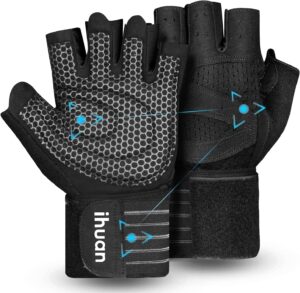
ihuan Ventilated Weight Lifting Gym…
Product description ✅ Full Palm Protection: No more torn hands and no more calluses. The Ihuan…
