
Beginner’s Guide to Strength Training at Home
Starting strength training at home is one of the most efficient ways to build muscle, improve posture, and feel stronger in everyday life. You don’t need a gym membership or fancy machines—just a plan, a few reliable pieces of equipment, and consistent progress.
This guide lays out practical steps: what gear matters, which movements to learn first, how to structure workouts, basic nutrition tips, and how to track progress safely. Read through and pick the parts that fit your time, space, and goals.
Why Strength Training at Home Works
Home training removes common barriers—travel time, crowded facilities, and schedule conflicts—so consistency becomes easier. With bodyweight moves and a handful of tools you can get effective full-body workouts, improve strength, and reduce injury risk when done with good technique.
Essential Equipment for Beginners
You don’t need a garage full of gear. Start with versatile, low-cost tools that allow progressive overload and variety. A basic setup might include a set of adjustable dumbbells, a kettlebell, and resistance bands.
Adjustable sets are ideal because they let you increase load without taking up space. Consider browsing options like Dumbbells to see usable home choices.
For dynamic single-arm work and swings, a cast-iron option such as the Yes4All Kettlebell is a solid addition to a beginner kit.
Resistance bands are excellent for accessory work, pull assistance, and warm-ups; they’re lightweight and portable. A simple starter pack like the Resistance bands will cover many movement patterns.
Basic Movement Patterns to Master
Focus on five fundamental patterns—squat, hinge, push, pull, and carry. These cover most daily tasks and make your training efficient.
- Squat: bodyweight squat → goblet squat → dumbbell squat
- Hinge: Romanian deadlift → kettlebell swing
- Push: push-up → dumbbell bench/overhead press
- Pull: inverted row → one-arm dumbbell row
- Carry: farmer carry with dumbbells or kettlebell
Learn one progression at a time. Prioritize technique over load—good form preserves joints and gives better long-term results.
How to Structure a Beginner Routine
For most beginners, full-body workouts performed 2–4 times per week offer the best balance of frequency and recovery. A simple template:
- Warm-up (5–10 minutes mobility + light cardio)
- Main lifts (2–3 compound exercises, 3 sets of 6–12 reps)
- Accessory work (2–3 exercises, 2–3 sets of 8–15 reps)
- Cool-down and stretching (5 minutes)
Example: Monday/Wednesday/Friday full-body—squat, hinge, push, pull, carry. Increase load or reps gradually each session to follow progressive overload.
Nutrition Basics for Strength Gains
Nutrition supports recovery and muscle growth. Focus on a modest protein target (roughly 0.6–1.0 grams per pound of bodyweight depending on activity), balanced meals, and adequate calories to match your goals.
Convenience gear helps you stay consistent—ready-made shakes and blended smoothies save time. Tools like Protein Shaker Bottles are handy for mixing post-workout shakes, and Personal Blenders let you make quick, nutrient-dense smoothies at home or on the go.
Tracking Progress: Simple Metrics that Matter
Keep a short training log: exercise, sets, reps, and approximate load. Track bodyweight and simple performance markers like number of quality push-ups or duration of a timed farmer carry.
Wearables and smart scales can give objective feedback on activity and recovery. If you like data, look at Fitness trackers for steps and general activity, and consider dedicated Heart rate monitors for effort-based pacing during conditioning. A reliable way to monitor body composition and weight trends is a Smart Body Weight Scales.
Recovery and Injury Prevention
Recovery is when gains happen. Prioritize sleep, nutrition, and light mobility on off days. Use active recovery—walking, foam rolling, or banded mobility—to reduce soreness and maintain range of motion.
Start each session with a 5–10 minute warm-up that raises heart rate and activates the muscles you’ll use. If pain (sharp or unfamiliar) occurs during an exercise, stop and reassess form or substitute the movement.
Practical Shopping and Space Tips
Pick equipment that fits your space and budget. Adjustable weights and compact tools maximize options for limited floorspace. If you’re choosing between many items, prioritize a pair of dumbbells, a kettlebell, and a band set for the widest exercise variety.
Beginner’s Checklist
- Decide schedule: 2–4 full-body sessions/week
- Get basic gear: dumbbells, kettlebell, resistance bands
- Create a short warm-up and cool-down routine
- Track workouts and increase load gradually
- Support with protein-rich meals and hydration
- Prioritize 7–9 hours of sleep and active recovery
FAQ
- How often should a beginner train?
2–4 full-body sessions per week is effective. Start with two and add a session when recovery improves.
- Can I build strength with bodyweight only?
Yes—progressions like elevated push-ups, single-leg squats, and slow tempos work well. Add external load as you outgrow bodyweight progressions.
- When should I increase weight?
When you can complete your target sets and reps with good form and a couple of reps in reserve, increase load slightly or add a set.
- How important is protein?
Protein supports muscle repair and growth. Aim to distribute protein across meals and include a post-workout source when possible.
- Do I need a trainer?
A trainer helps with technique and programming, especially if you have injuries or complex goals. For many beginners, clear guides and occasional coaching are sufficient.
Conclusion
Start simple, be consistent, and focus on form. With a few core tools, a short plan, and steady tracking, you’ll make measurable progress in strength and daily function. Choose one routine, commit to a month of training, and adjust based on how your body responds.
Products Featured in This Article
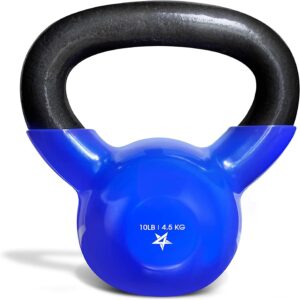
Yes4All Kettlebell, 5-100 LB Vinyl …
Product description What weight should I start with as a beginner? Beginners typically start with 5-15…

Resistance Bands for Working Out, 5…
Resistance Bands for Working Out Complete 5-Pack Fitness Kit: This versatile set of durable resistance bands…
